

Casinos handle millions of dollars in cash, host thousands of guests daily, and face constant security threats ranging from fraud to violent crime. Traditional security measures like surveillance cameras and security personnel can only do so much when monitoring large crowds across massive gaming floors. Facial recognition technology now gives casinos the ability to identify potential threats, banned individuals, and self-excluded patrons in real time, making gaming environments safer for everyone.
This technology scans faces and matches them against databases of known threats, problem gamblers, and VIP guests within seconds. You might walk through a casino entrance without realizing cameras have already verified your identity and checked you against multiple watchlists. The system works quietly in the background while security teams receive instant alerts about individuals who need attention.
Understanding how casinos use facial recognition helps you see both its security benefits and privacy implications. This technology goes beyond just catching criminals—it streamlines entry for regular guests, helps combat human trafficking, and supports responsible gambling programs. Whether you’re a casino operator considering this technology or a guest curious about how you’re being monitored, knowing how these systems work gives you a clearer picture of modern casino security.
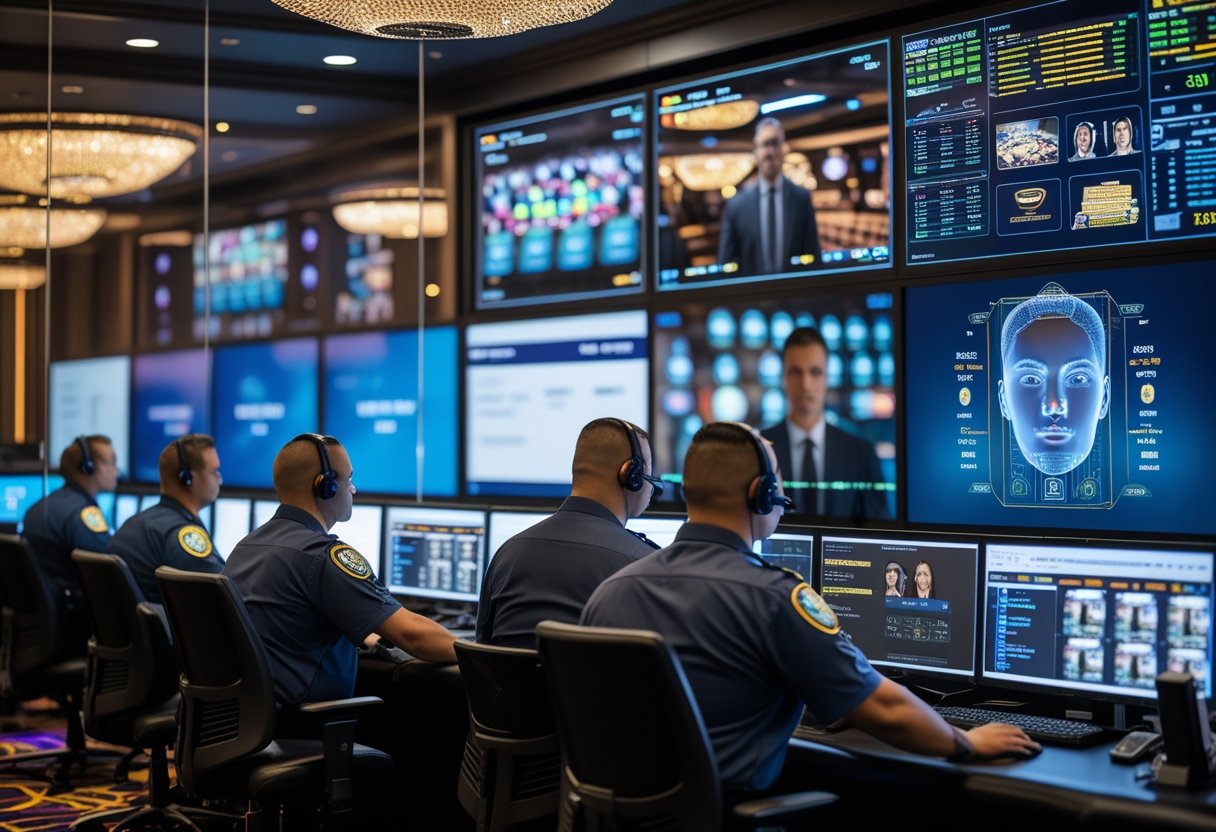
How Facial Recognition Works in Casino Security?
Casino facial recognition technology uses cameras and artificial intelligence to identify people based on their unique facial features. The system captures images, converts them into biometric data, and matches them against databases in real time to flag banned players, self-excluded individuals, or VIPs.
Biometric Mapping and Feature Extraction
When you enter a casino, surveillance cameras capture your facial image. The facial recognition software analyzes key points on your face, including the distance between your eyes, nose width, jawline shape, and other unique markers. This process maps over 60 facial landmarks to create a biometric template.
Deep learning algorithms convert these physical characteristics into a digital signature that represents your face. This biometric data works even if you’re wearing glasses, have facial hair, or are captured at different angles. The system can handle poor lighting conditions and compensate for aging or changes in appearance.
The entire mapping process happens in milliseconds. Modern facial recognition systems achieve accuracy rates above 95% in identifying individuals on the casino floor.
Integration with Surveillance Systems
Casinos place high-definition surveillance cameras at entrances, gaming floors, cashier stations, and VIP lounges. These cameras feed live footage directly into the facial recognition software, which continuously scans for faces.
The system operates silently in the background as you move through the casino. Multiple cameras track your movements across different areas, creating a comprehensive view of your activity. This integration allows security teams to monitor thousands of guests simultaneously without requiring manual observation of every camera feed.
Cloud computing enables the facial recognition technology to process massive amounts of visual data instantly. The system doesn’t need human input to begin scanning and identifying faces.
Database Matching and Real-Time Alerts
Your biometric template gets compared against multiple databases at once. These include lists of banned players, self-excluded individuals, known card counters, casino employees, and VIP customer profiles.
When the system finds a match, it assigns a confidence score. If that score exceeds the threshold, security receives an instant alert on their devices. The alert includes your photo, matching database entry, and current location in the casino.
Security staff can then respond based on the match type. They might escort out a banned player, greet a high-roller with personalized service, or monitor a suspected advantage player. The entire process from face capture to alert takes just seconds, allowing your casino to respond before you even reach the gaming tables.
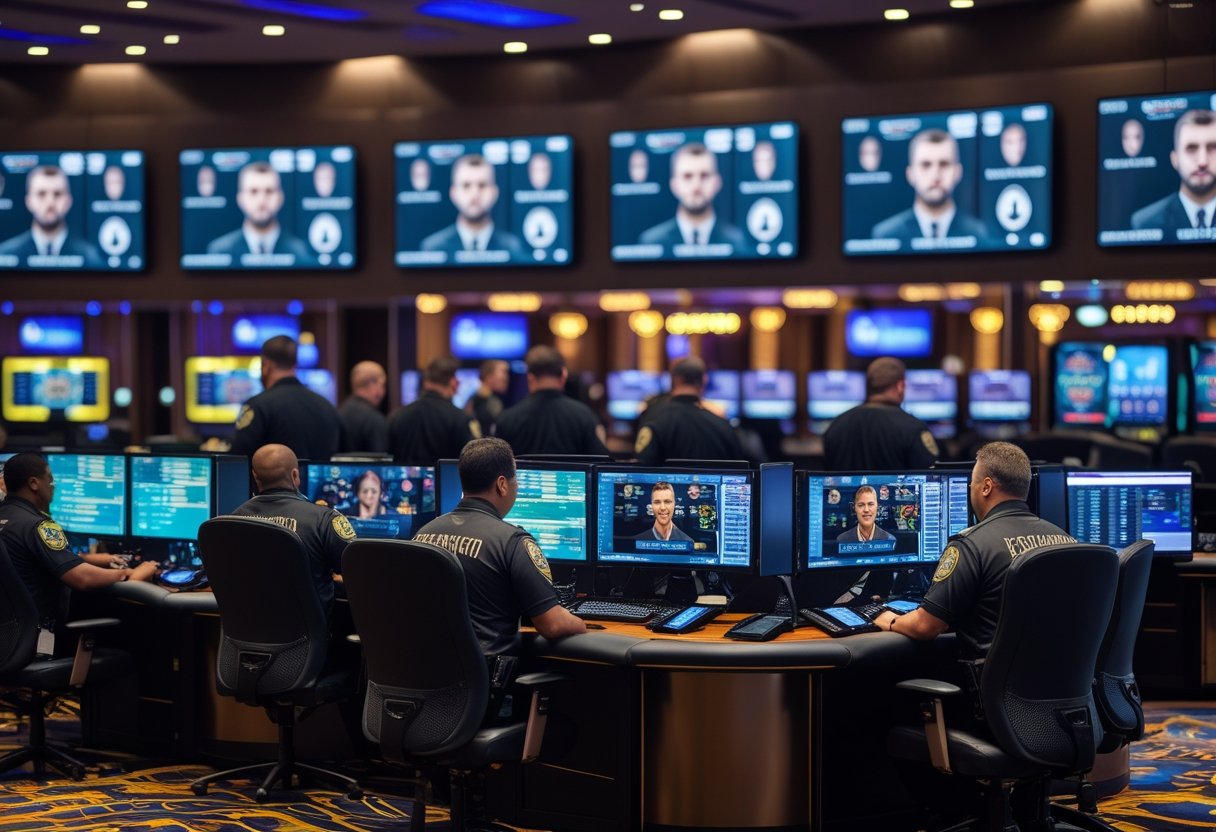
Key Applications of Facial Recognition in Casinos
Casinos use facial recognition technology to identify and manage specific groups of people who enter their properties. The systems scan faces at entrances and throughout gaming floors to detect banned individuals, enforce self-exclusion agreements, and spot advantage players who threaten casino profits.
Crime Prevention and Banned Individual Detection
Facial recognition helps casinos identify criminals before they can cause problems. When someone enters a casino, cameras capture their face and compare it against databases of banned individuals. These databases include people involved in theft, fraud, money laundering, and even human trafficking.
The system sends instant alerts to security when it finds a match. Your security team can then act quickly to remove the person from the property. This prevents crimes before they happen rather than responding after the fact.
Many casinos share their banned lists with other properties. This means someone banned at one casino may be flagged at others across a region or country. The technology has made it much harder for criminals to move between casinos undetected.
Casino security also uses facial recognition for identity verification at high-value transactions. This adds an extra layer of fraud prevention when players cash out large amounts or access restricted areas.
Self-Excluded and Excluded Player Enforcement
Self-exclusion programs let problem gamblers voluntarily ban themselves from casinos. In the past, enforcement relied on staff memory and ID checks. Now facial recognition makes enforcement automatic and reliable.
When you walk into a casino that uses facial recognition, the system checks your face against self-exclusion registries. Industry data shows these systems catch over 85% of self-excluded individuals who try to re-enter. That’s a huge jump from the under 25% catch rate from a decade ago.
The system works as a case management tool that tracks when excluded players attempt entry. Security receives immediate alerts and can escort the person out before they reach gaming areas. Some casinos let you upload your own photo when you self-exclude, making the system even more effective.
This technology protects vulnerable players while helping casinos meet gambling regulations. It’s become one of the most praised uses of facial recognition in the industry.
Advantage Player and Card Counter Monitoring
Casinos use facial recognition to spot advantage players and card counters who use legal but unwanted strategies to gain an edge. Card counters track cards in blackjack to improve their odds. While not illegal, casinos have the right to exclude these players.
Your facial recognition system can identify known card counters the moment they enter. It also watches for teams working together at tables or unusual betting patterns linked to specific players. The AI combines facial data with behavior analysis to flag suspicious activity.
When the system spots an advantage player, it alerts pit bosses and security through the access control system. Staff can then take action, from increasing dealer shuffle frequency to asking the player to leave. This protects your gaming revenue without waiting for losses to pile up.
The technology has made it nearly impossible for skilled advantage players to operate undetected across multiple properties. Even disguises like hats, glasses, or facial hair rarely fool modern systems.
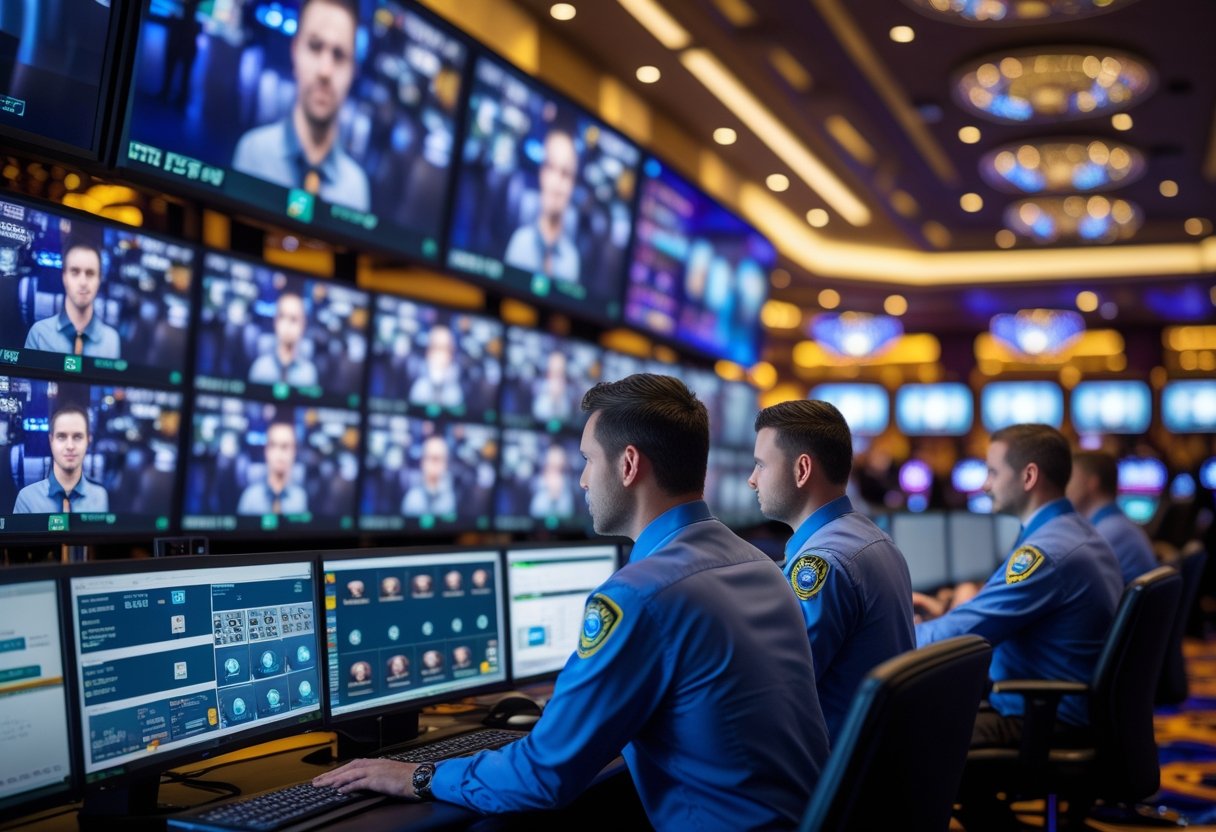
Enhancing the Guest Experience with Facial Recognition
Facial recognition technology allows casino operators to create faster, more personalized experiences for guests while maintaining security standards. This technology streamlines entry processes and helps casinos recognize valuable players instantly.
Personalized Services for VIPs and High Rollers
Casino facial recognition software identifies high rollers the moment they arrive. Your staff receives instant notifications when valuable players enter the casino floor.
This immediate player recognition allows you to offer personalized greetings and services. Your team can prepare preferred table games, notify hosts, and arrange complimentary amenities before the guest reaches the gaming area.
Marketing kiosks equipped with facial recognition display guest profiles on tablets without requiring identification. Guests claim promotional items and rewards without reaching for wallets or player cards. This creates a frictionless customer experience that makes VIP guests feel valued and recognized.
The technology tracks player preferences across visits. Your casino can note favorite games, beverage choices, and spending patterns to deliver tailored experiences that increase customer retention.
Seamless Entry and ID Checks
One New York casino processes up to 10,000 guests daily using a Red Light, Green Light system. First-time visitors complete standard ID checks, but returning guests skip repetitive verification.
The system confirms identities in milliseconds while scanning for banned individuals and self-excluded patrons. Your guests move through entry points faster without compromising compliance requirements.
This approach eliminates bottlenecks at casino entrances during peak hours. Guests spend less time waiting in lines and more time on the gaming floor. The improved flow enhances the overall guest experience while maintaining regulatory standards.
Customer Retention and Loyalty Program Integration
Facial recognition connects directly to your loyalty programs without requiring physical cards. Guests earn and redeem rewards automatically as they play games or make purchases.
Your point-of-sale systems at restaurants and bars recognize members instantly. Staff can apply discounts and track spending without asking guests to present identification or membership cards.
This integration extends beyond the gaming floor to ATMs, cage transactions, and retail locations. Your casino builds detailed guest profiles that track preferences and spending patterns across all touchpoints. You can use this data to create targeted promotions and personalized offers that keep guests returning.
The technology creates audit trails for every transaction and interaction. Your marketing team gains insights into which promotions work best for different player segments.
Responsible Gambling and Regulatory Compliance
Facial recognition systems help casinos meet their legal obligations while protecting vulnerable players. These tools support self-exclusion programs, anti-money laundering checks, and data compliance requirements across different jurisdictions.
Responsible Gaming Enforcement
Facial recognition technology gives casinos the ability to identify self-excluded patrons as soon as they enter the premises. When someone voluntarily bans themselves from a casino due to gambling problems, the system automatically flags their face in the database. Staff receive instant alerts so they can escort the person out before they start gambling.
The technology works even when people try to hide their identity. In Australia, one self-excluded individual attempted to enter a casino three times while wearing disguises. The facial recognition system identified him each time and prevented entry.
You can track how long specific players spend on the gambling floor. This helps your team spot warning signs of problem gambling, like extended sessions or unusual betting patterns. The system also detects underage individuals trying to access gaming areas.
Key enforcement capabilities:
- Real-time identification of self-excluded players
- Detection of minors attempting entry
- Monitoring of play duration and frequency
- Recognition through disguises or altered appearances
AML and Legal Requirements
Casinos must follow anti-money laundering regulations like U.S. Title 31 and similar laws worldwide. Facial recognition helps you meet these obligations by tracking uncarded play, which creates blind spots in your compliance programs.
The system maintains records of who enters your facility and when. This documentation proves essential during regulatory audits. You can quickly retrieve visitor histories and transaction patterns linked to specific individuals.
Different regions have varying data protection laws. GDPR in Europe requires strict consent and data handling procedures. Your facial recognition system needs proper safeguards to store and process biometric information legally.
Database Management and Reporting
Your casino needs robust case management tools to handle the data facial recognition systems generate. Platforms like eConnect help you organize information about banned individuals, high rollers, and self-excluded patrons in one central location.
The database must categorize different types of flagged individuals. Self-excluded patrons require different responses than known criminals or advantage players. Your system should specify the appropriate action for each category.
You need audit trails showing when alerts triggered and how staff responded. This documentation protects your casino during compliance reviews. Regular database updates ensure accuracy as people’s appearances change over time.
Essential database features:
- Secure storage of biometric data
- Access controls limiting who views sensitive information
- Automated reporting for regulatory submissions
- Regular accuracy checks and system calibration
Leading Casino Facial Recognition Solution Providers
Several companies have developed specialized facial recognition platforms designed specifically for casino environments. These providers offer different strengths in areas like AI accuracy, system integration, and real-time identification capabilities.
FaceFirst Capabilities
FaceFirst operates a patented face matching platform that uses artificial intelligence and deep learning to identify persons of interest in casino settings. The system works with most existing camera infrastructure, which reduces installation costs for gaming facilities.
The platform handles multiple security functions at once. It can detect card counters, criminals, and people enrolled in voluntary exclusion programs when they enter a casino floor. Security teams receive instant alerts that tell them where to go, who to look for, and what action to take based on casino policies.
FaceFirst also manages VIP recognition by alerting staff when high-value guests arrive. The system identifies individual faces even in crowded spaces and includes predictive analytics that use historical data to forecast when unwanted guests are most likely to appear. This helps casinos adjust staffing levels based on actual risk patterns.
The technology includes forensic video search capabilities that let security teams search through footage across multiple locations. Casino investigators can use these tools to identify crime patterns and gather evidence more quickly than manual video review methods allow.
Paravision and Their Impact
Paravision focuses on real-time threat detection and identity verification for casino and entertainment venues. Their technology addresses security concerns while also improving guest experience through faster access control.
The system helps casinos combat serious issues like human trafficking by identifying known offenders when they enter the property. This capability has made Paravision particularly valuable for venues that prioritize both guest safety and regulatory compliance.
Paravision’s platform delivers frictionless access for legitimate guests while maintaining strong security protocols. The technology processes identification checks without requiring guests to stop or interact with security systems directly. This balance between security and convenience has become important as casinos work to create welcoming environments that still protect against threats.
eConnect’s Integration Approach
eConnect has built their facial recognition solution around digital integration with existing casino management systems. Their platform connects surveillance technology with operational databases to create a more unified security approach.
The company emphasizes how facial recognition makes casino surveillance more complex operations simpler through digital solutions. eConnect’s system is designed to work alongside current casino technology rather than replacing it entirely, which can lower implementation barriers for properties with established infrastructure.
Privacy Concerns and Ethical Considerations
Casinos implementing facial recognition technology face significant privacy challenges that require careful attention to data protection laws, customer consent, and maintaining trust. Your casino must address how biometric data is collected, stored, and used while being transparent with customers about surveillance practices.
Biometric Data Protection
Your facial recognition system creates a unique biometric map of each person’s face. This data is highly sensitive because it cannot be changed like a password. You need to protect this information with strong encryption and secure storage systems.
GDPR and similar laws classify biometric data as a special category that requires extra protection. If you operate in regions with these regulations, you must follow strict rules about data collection and retention. You need to limit how long you keep facial scans and who can access them.
Data breaches pose serious risks because stolen biometric data can lead to identity theft. Your security measures should include access controls, regular audits, and incident response plans. You also need to decide whether to store facial data locally or use cloud-based systems.
Transparency and Consent
Many casino guests don’t know they’re being scanned by facial recognition cameras. You should clearly inform customers about your surveillance practices through visible signage and written policies. This transparency helps customers make informed decisions about entering your property.
Consent requirements vary by location. Some jurisdictions require explicit opt-in consent before collecting biometric data. You may need customers to agree to facial recognition scanning before they can enter certain areas.
Your privacy policy should explain what facial data you collect, why you collect it, and how long you keep it. You need to tell customers if you share their data with third parties or law enforcement. Being upfront about these practices reduces legal risks and builds credibility.
Balancing Security with Customer Trust
You face a challenge between using facial recognition for security and respecting customer privacy. While the technology helps identify banned players and prevent fraud, excessive monitoring can make guests uncomfortable.
You can build trust by giving customers some control over their data. This might include opt-out options for loyalty program facial recognition or the ability to request data deletion. You should also train staff to answer questions about your privacy practices.
Your security benefits need to justify the privacy intrusions. Using facial recognition to stop known cheaters serves a clear purpose. Using it to track every customer movement without good reason may damage your reputation and violate privacy laws.
Frequently Asked Questions
Casinos rely on facial recognition to spot banned players and reward VIPs, but the technology raises questions about privacy protections, legal boundaries, and how systems catch fraud before it impacts operations.
How do casinos use facial recognition to enhance security?
Casinos use facial recognition to monitor everyone who enters their property in real time. High-definition cameras capture your face at entrances, gaming floors, and cashier stations. The system creates a biometric map of your facial features and compares it against databases containing known cheaters, banned players, and self-excluded individuals.
When the system finds a match, it sends an instant alert to security staff. They can then take action before you reach the gaming tables. This process happens in seconds, often before you’ve walked more than a few feet into the building.
The technology also identifies VIP players automatically. Staff receive notifications when high-value customers arrive, allowing them to provide personalized service without requiring you to show a loyalty card or check in at a desk.
Modern systems achieve accuracy rates above 95 percent. They work even when lighting isn’t perfect or when you’re wearing glasses or a hat. The cameras track movement patterns and can flag suspicious behavior like lingering near restricted areas or making unusual trips between tables.
What measures are in place to ensure the privacy of patrons with the use of facial recognition in casinos?
Many jurisdictions now require casinos to disclose when facial recognition is active on their property. You should see signage at entrances or in gaming areas informing you that cameras are capturing and analyzing faces.
Casinos must follow data retention policies that limit how long they store your facial data. Some states require them to delete your biometric information within a specific timeframe if you’re not flagged for security reasons or enrolled in a loyalty program.
You can sometimes opt out of facial recognition systems, though this may limit your access to certain areas or services. Casinos that offer opt-out programs typically provide a form you can submit to have your data excluded from their databases.
Data encryption protects stored facial templates from unauthorized access. Casinos use secure servers and restrict employee access to facial recognition data based on job roles. Only security personnel and specific managers can view matches or alerts.
Third-party audits help ensure compliance with privacy regulations. Some casinos hire independent firms to review their data handling practices and confirm they’re following local and federal privacy laws.
In what ways can facial recognition technology help identify fraudulent activity in casinos?
Facial recognition spots teams of players working together to cheat at table games. The system recognizes when multiple flagged individuals enter the casino at the same time or gather at the same table. This helps security identify collusion before significant losses occur.
The technology tracks known chip thieves and pickpockets. When someone on a watchlist enters the property, security receives an immediate alert and can monitor that person’s movements throughout the casino floor.
Card counters get identified quickly through facial recognition. While card counting isn’t illegal, casinos can ban players who use this technique. The system recognizes these individuals even if they try to disguise their appearance with different clothing or accessories.
The software also detects unusual betting patterns when combined with player identification. If you’re recognized as someone who typically bets small amounts but suddenly place large wagers, the system flags this behavior for review.
Fraudulent loyalty program activity gets caught through facial matching. If someone tries to use another person’s loyalty card or account, the system compares the face at the machine or table with the account holder’s photo and alerts staff to the mismatch.
What are the legal implications of using facial recognition in casino establishments?
Casino facial recognition operates under different laws depending on your location. Some states require explicit consent before your biometric data can be collected or stored. Others allow casinos to use the technology as long as they post visible notices.
Illinois, Texas, and Washington have strict biometric privacy laws that regulate how casinos handle facial data. These states require written consent and impose penalties for violations. Casinos operating in these areas must maintain detailed records of data collection and deletion.
Federal regulations don’t specifically govern facial recognition in casinos. However, the Americans with Disabilities Act and civil rights laws still apply. Casinos must ensure their systems don’t discriminate based on protected characteristics.
Self-exclusion programs create legal obligations for casinos using facial recognition. If you voluntarily ban yourself from a casino and the facial recognition system fails to identify you, the casino may face liability if you gamble and claim the property didn’t enforce your exclusion.
Gaming commissions in Nevada, New Jersey, and other major gambling states have issued guidance on facial recognition use. These agencies require casinos to demonstrate that their systems are accurate and don’t create unfair advantages or disadvantages for specific groups of players.
How does facial recognition technology integrate with other security systems in casinos?
Facial recognition connects directly to existing surveillance camera networks. The same cameras that record activity on the gaming floor now also analyze faces and send data to the facial recognition software in real time.
The system links with access control platforms that manage entry to restricted areas. When your face is recognized as belonging to an employee or VIP, doors unlock automatically without requiring key cards or manual verification.
Player tracking systems merge with facial recognition data to create comprehensive profiles. Your betting history, game preferences, and loyalty tier sync with your facial template, allowing casinos to build detailed records of your behavior.
Point-of-sale systems at bars and restaurants use facial recognition to verify age and identify VIP guests. When you order a drink, the system can confirm you’re over 21 and alert staff to comp your order based on your player status.
Security incident management platforms receive alerts from facial recognition systems. When the software identifies a banned player or suspicious individual, it creates a case file that security teams can track and resolve through their standard protocols.
Are there reliable methods for patrons to evade facial recognition at casinos, and what are the consequences?
Modern facial recognition systems are difficult to fool. Wearing hats, glasses, or makeup typically won’t prevent identification because the software analyzes dozens of facial landmarks that remain constant despite these changes.
Deliberately obscuring your face with masks or scarves will likely get you stopped by security. Casinos view this behavior as suspicious, and staff will ask you to remove any coverings or leave the property.
Some people try to change their appearance through surgery or dramatic weight changes. While this might reduce accuracy, the systems in 2025 use AI that adapts to aging and moderate physical changes over time.
If you’re on a self-exclusion list and attempt to enter a casino, the consequences extend beyond just being escorted out. You may face criminal trespassing charges depending on your state’s laws. Any winnings you earn before being caught can be forfeited.
Attempting to defeat facial recognition through sophisticated disguises or technology could result in criminal charges. Some jurisdictions treat this as fraud or identity deception, especially if you’re trying to evade