
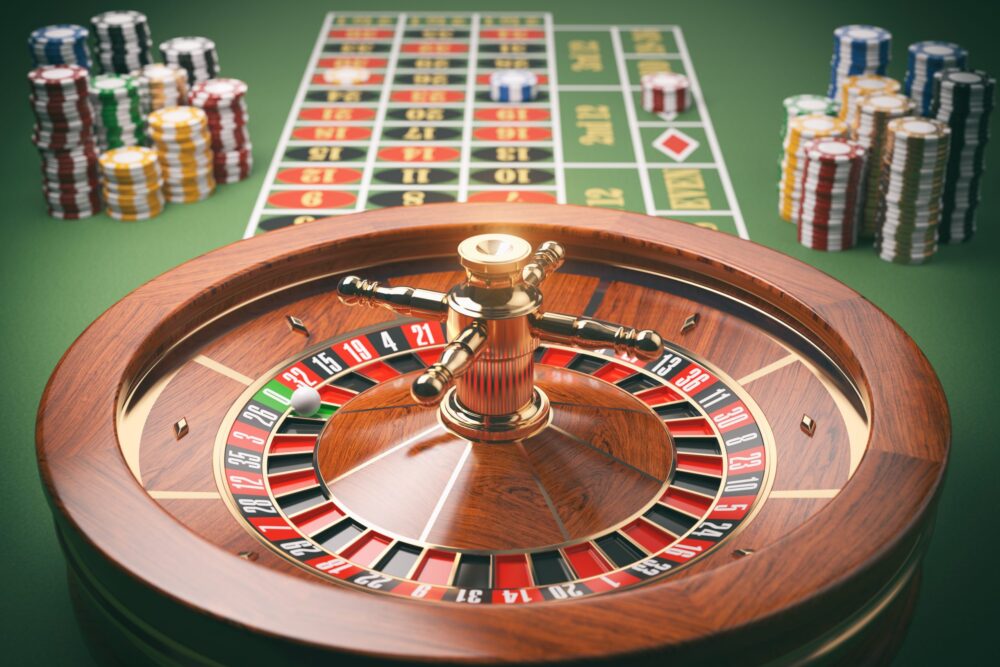
Many roulette players stick to simple red or black bets without knowing about one of the game’s most interesting betting options. Neighbor bets let players cover multiple numbers that sit next to each other on the roulette wheel, not the betting table. A neighbor bet covers a chosen number plus the numbers on either side of it on the wheel, typically ranging from 3 to 7 numbers total.

This betting strategy appeals to players who want to cover specific sections of the wheel rather than random numbers spread across the table. The most famous neighbor bet is “Voisins du Zero,” which covers 17 numbers around the zero. However, modern roulette games often let players create custom neighbor bets on any number they choose.
Understanding neighbor bets opens up new ways to play roulette and can reduce the volatility that comes with single-number betting. Players will learn how these bets work, where to find them on different roulette variants, and how to calculate their odds and payouts effectively.
What Are Roulette Neighbor Bets?

Roulette neighbor bets let players wager on a selected number plus the adjacent numbers around it on the roulette wheel. These bets cover multiple numbers in a single wager and work differently from traditional betting options.
Definition and Key Features
Roulette neighbor bets are wagers placed on a chosen number and its neighboring numbers on the physical roulette wheel. The bet covers five numbers total – the selected number plus two numbers on each side.
Players can select any number as the center point. The bet then automatically includes the two numbers directly to the left and right of that number on the wheel layout.
Key features include:
- Covers exactly 5 numbers per bet
- Based on wheel position, not table layout
- Requires 5 separate chips (one per number)
- All bets are straight-up wagers
- Available in most European roulette games
The betting pattern follows the actual wheel sequence. For example, a neighbor bet on number 17 would cover numbers 25, 2, 21, 4, and 19 in European roulette.
Each number receives an equal stake. If a player bets $5 total, each of the five numbers gets $1.
History and Popularity
Neighbor bets originated in European casinos during the 18th century. French roulette players developed this strategy to cover wheel sections more efficiently.
The betting method gained popularity because it offered better coverage than single number bets. Players could target specific wheel areas without placing multiple individual wagers.
European roulette games adopted neighbor bets as a standard feature. Most online European roulette tables now include a special betting area called the “racetrack” for these wagers.
American casinos were slower to adopt neighbor bets. The double-zero wheel layout made the strategy less appealing to players and operators.
Modern online casinos feature neighbor bets prominently. The digital format makes placing these complex bets much easier than at physical tables.
Comparison to Other Roulette Bets
Neighbor bets differ significantly from standard roulette betting options. Traditional bets focus on table layout positions like red/black or odd/even.
Neighbor bets vs. other roulette bets:
| Bet Type | Numbers Covered | Payout | Win Probability (European) |
|---|---|---|---|
| Neighbor Bet | 5 | 35:1 each number | 13.5% |
| Single Number | 1 | 35:1 | 2.7% |
| Split Bet | 2 | 17:1 | 5.4% |
| Corner Bet | 4 | 8:1 | 10.8% |
Standard inside bets cover numbers based on their table positions. Neighbor bets cover numbers based on their wheel positions instead.
Outside bets like red/black offer higher win chances but lower payouts. Neighbor bets provide moderate coverage with the potential for high payouts if any covered number hits.
Roulette Wheel Layout and Table Setup

The roulette wheel has a specific number order that differs from the betting table layout, while the racetrack section enables neighbor bets by mirroring the wheel’s sequence.
The Racetrack and Its Role in Neighbor Bets
The racetrack is a special betting area that shows numbers in the exact order they appear on the roulette wheel. It appears as an oval section on most European and French roulette tables.
Players use the racetrack to place neighbor bets quickly and easily. When someone clicks on a number in the racetrack, they automatically bet on that number plus the numbers on both sides of it.
The racetrack offers several key features:
- Shows all 37 numbers in wheel order
- Allows bets on 1 to 9 neighbors on each side
- Contains preset section bets in the center
- Only available on European and French roulette
Online roulette tables often hide the racetrack behind a menu or icon. Players need to find this section to make neighbor bets.
Number Order on the Roulette Wheel
The European roulette wheel follows a specific pattern that balances odd and even numbers, high and low numbers, and red and black colors. The numbers do not appear in counting order.
European wheel sequence (clockwise from 0): 0, 32, 15, 19, 4, 21, 2, 25, 17, 34, 6, 27, 13, 36, 11, 30, 8, 23, 10, 5, 24, 16, 33, 1, 20, 14, 31, 9, 22, 18, 29, 7, 28, 12, 35, 3, 26
This arrangement ensures that consecutive numbers on the wheel are spread far apart on the betting table. The wheel design prevents players from easily betting on numbers that sit next to each other physically.
Each number has two neighbors on each side. For example, number 14 sits between 20 and 31 on the wheel.
Difference Between Wheel and Table Layout
The betting table arranges numbers 1-36 in three columns and twelve rows for easy betting. The wheel places these same numbers in a completely different order around its rim.
Key differences include:
| Table Layout | Wheel Layout |
|---|---|
| Numbers 1-36 in order | Mixed number sequence |
| Three columns | Single circle |
| Rectangular grid | Circular arrangement |
| Easy outside bets | Neighbor relationships |
The table layout helps players make standard bets like red/black or odd/even. The wheel layout creates neighbor relationships that players can only bet using the racetrack.
Number 1 sits in the first table position but appears between 33 and 20 on the wheel. This separation means table neighbors and wheel neighbors are completely different concepts.
Players must understand both layouts to make effective neighbor bets and regular table bets.
Types of Neighbor Bets in Roulette
Roulette offers four main types of neighbor bets that cover specific sections of the wheel. Standard neighbor bets let players choose any number with its neighbors, while voisins du zero, tiers du cylindre, and orphelins are preset combinations that cover fixed wheel sections.
Standard Neighbor Bet
The standard neighbor bet allows players to select any number on the wheel along with the adjacent numbers on both sides. This bet typically covers five numbers total – the chosen number plus two neighbors on each side.
Players can adjust how many neighbors they want to include. Most casinos allow between one and four neighbors on each side of the main number.
Each number in the bet is treated as a separate straight-up wager. If the table minimum is $5, a five-number neighbor bet costs $25 total.
The payout remains 35:1 for whichever number hits. However, only one number can win per spin, so the other four bets are lost.
Voisins du Zero
Voisins du zero covers 17 numbers around the zero on the European wheel. This section includes zero and the eight numbers on each side: 22, 18, 29, 7, 28, 12, 35, 3, 26, 0, 32, 15, 19, 4, 21, 2, 25.
The bet requires nine chips and uses different betting combinations:
- 4 chips on splits: 4/7, 12/15, 18/21, 19/22, 32/35
- 2 chips on the 0/2/3 trio
- 2 chips on splits: 25/26/28/29 corner bet
- 1 chip on split: 8/11 (this is actually covered in the corner bet)
Payouts vary based on which number wins. Split bets pay 17:1, the trio pays 11:1, and corner bets pay 8:1.
Tiers du Cylindre
Tiers du cylindre covers 12 numbers on the opposite side of the wheel from voisins du zero. These numbers are: 27, 13, 36, 11, 30, 8, 23, 10, 5, 24, 16, 33.
This bet uses six chips placed on six different splits:
- 5/8
- 10/11
- 13/16
- 23/24
- 27/30
- 33/36
Each split bet pays 17:1 when it wins. The total cost is six times the table minimum for split bets.
Tiers covers exactly one-third of the European roulette wheel. The name means “third of the wheel” in French.
Orphelins
Orphelins covers the eight remaining numbers not included in voisins du zero or tiers du cylindre. These orphan numbers are split into two groups: 1, 20, 14, 31, 9 and 17, 34, 6.
The bet requires five chips with this placement:
- 1 chip straight-up on number 1
- 4 chips on splits: 6/9, 14/17, 17/20, 31/34
The straight-up bet on 1 pays 35:1. The four split bets each pay 17:1.
This bet covers two separate arcs on the wheel. The name “orphelins” means orphans in French, referring to the numbers left out of the other section bets.
How to Place Roulette Neighbor Bets
Players can place neighbor bets differently depending on whether they’re playing at physical casinos or online platforms. The process varies between roulette variants, with European and French roulette offering full support while American roulette typically doesn’t include this betting option.
Placing Bets at Land-Based Casinos
At land-based casinos, players must announce neighbor bets verbally to the dealer. These are called “announced bets” or “call bets” because the croupier places them on behalf of the player.
To place the bet, a player tells the dealer which number they want plus the neighbors. For example, saying “7 and the neighbors” covers five numbers: 29, 18, 7, 11, and 30.
The dealer places the chips on a special racetrack section of the table. This racetrack shows all numbers in wheel order, not table order.
Key steps for land-based play:
- Announce the center number clearly
- State “and the neighbors”
- Specify bet amount per number
- Wait for dealer confirmation
Players should know the minimum bet requirements. If the table minimum for inside bets is $5, then each of the five numbers needs $5, making the total neighbor bet $25.
Making Neighbor Bets Online
Online roulette makes neighbor bets easier through digital interfaces. Players don’t need to announce bets verbally since they can click directly on the racetrack.
Most online European roulette and French roulette tables include a racetrack feature. This may appear as a separate section or require activation through a menu button.
Online betting process:
- Locate the racetrack – Look for the oval track showing wheel numbers
- Select bet amount – Choose chip value using betting controls
- Click target number – Select the center number on the racetrack
- Adjust neighbors – Use +/- buttons to change how many neighbors (usually 2 by default)
- Confirm spin – Click spin to start the round
Live dealer roulette combines both methods. Players can use the digital racetrack or type their neighbor bet in the chat for the live dealer to place.
Some online tables allow multiple neighbor bets simultaneously. Players can cover different wheel sections by placing several neighbor bets at once.
Variations in European, French, and American Roulette
European roulette fully supports neighbor bets with a standard racetrack layout. The single zero wheel makes neighbor betting calculations straightforward with 37 total numbers.
French roulette offers the most neighbor bet options. Beyond basic neighbor bets, it includes special section bets like Voisins du Zero and Tiers du Cylindre that cover predetermined wheel sections.
French tables often display section bet names in French:
- Voisins du Zero – Covers 17 numbers around zero
- Tiers du Cylindre – Covers 12 numbers opposite zero
- Orphelins – Covers 8 remaining numbers
American roulette rarely includes neighbor betting. The double zero wheel (00) changes number sequences, making traditional neighbor bets impractical. Most American roulette tables lack racetracks entirely.
When available on American wheels, neighbor bets work the same way but cover different number sequences due to the altered wheel layout. The house edge remains higher at 5.26% versus 2.70% for European variants.
Rules, Odds, and Payouts for Neighbor Bets
Neighbor bets follow specific rules that divide stakes equally across selected numbers, with odds determined by how many numbers you cover. The house edge remains consistent with straight-up bets, while payouts are calculated at 35:1 for each winning number.
Neighbor Bet Rules
Players select a main number and choose neighbors on each side of it on the roulette wheel. The standard neighbor bet covers five numbers: the chosen number plus two on each side.
The total stake gets divided equally among all selected numbers. If a player bets $5 on five numbers, $1 goes on each number.
Some games allow customization of neighbor counts. Players might choose anywhere from one to nine neighbors on each side, depending on the casino’s rules.
Key Rules:
- Stakes split evenly across all numbers
- Based on wheel position, not table layout
- Only one number can win per spin
- Minimum bet requirements apply to total stake
The croupier handles chip placement at live tables. Online games typically use a racetrack interface where players click their main number and select neighbor count.
Odds and Probabilities
The odds depend entirely on how many numbers the bet covers. A standard five-number neighbor bet has a 5/37 chance of winning in European roulette (13.51%).
In American roulette, the same five numbers have a 5/38 chance of winning (13.16%). The extra zero reduces winning probability slightly.
Probability by Number of Neighbors:
- 3 numbers (1 each side): 8.11% (European), 7.89% (American)
- 5 numbers (2 each side): 13.51% (European), 13.16% (American)
- 7 numbers (3 each side): 18.92% (European), 18.42% (American)
More numbers mean better winning chances but lower individual payouts. Each additional neighbor increases the total stake while the win amount stays the same.
The roulette odds for neighbor bets are identical to multiple straight-up bets placed simultaneously.
Payout Structures and House Edge
Neighbor bets pay 35:1 on the winning number only. If a $5 bet covers five numbers at $1 each, only the winning $1 portion pays out at 35:1.
The total return equals $36 (including the original $1 stake). The remaining $4 staked on losing numbers is lost.
Payout Example:
- Total bet: $5 on five numbers
- Stake per number: $1
- Win payout: $35 + $1 original stake = $36
- Net profit: $36 – $5 = $31
The house edge matches standard European roulette at 2.70%. In American roulette, it increases to 5.26% due to the double zero.
This house edge applies because neighbor bets are essentially multiple straight-up bets. The casino’s advantage remains constant regardless of how many neighbors you select.
Strategies and Tips for Using Neighbor Bets
Neighbor bets require careful planning to maximize their effectiveness while managing risk. These bets work best when combined with proper bankroll management and an understanding of how they compare to traditional betting options.
Integrating Neighbor Bets into Your Roulette Strategy
Players can use neighbor bets as an alternative to traditional even-money wagers like red or black. An 8-neighbor bet covers 17 numbers, providing slightly less coverage than betting on red or black but targeting a specific wheel section.
The 5-neighbor bet covers 11 numbers total. This gives players similar coverage to dozen bets or column bets but focuses on adjacent wheel positions instead of table layout groupings.
Hot and cold sector betting works well with neighbor bets. Players track which wheel sections hit frequently and place neighbor bets on those areas. However, each spin remains independent regardless of previous results.
Some players mix neighbor bets with their regular roulette play. They might use neighbor bets for 20% of their wagers while using standard inside bets or outside bets for the remaining 80%.
Comparing Inside and Outside Bets
Neighbor bets fall between inside bets and outside bets in terms of risk and reward. A standard 5-number neighbor bet has better winning odds than single number bets but worse odds than outside bets like red or black.
Coverage comparison:
- Single number bet: 1/37 chance (2.7%)
- 5-number neighbor bet: 5/37 chance (13.5%)
- Red/black bet: 18/37 chance (48.6%)
The payout structure differs significantly. Inside bets on single numbers pay 35:1 but neighbor bets reduce the overall return. If one number hits in a 5-number neighbor bet, the player receives 35:1 on one chip but loses four chips.
Neighbor bets offer more action than outside bets. Players get multiple chances to win on each spin while maintaining better odds than straight-up number betting.
Bankroll Management for Neighbor Bets
Players need larger bankrolls for neighbor bets compared to outside bets. A 5-number neighbor bet costs five times more than a single number bet. Betting $5 per neighbor bet actually places $25 in total wagers.
Budget allocation guidelines:
- Limit neighbor bets to 10-15% of total session bankroll
- Use smaller chip values than regular betting
- Plan for longer losing streaks than outside bets
The volatility sits between inside and outside betting. Players experience more frequent wins than single number betting but face longer dry spells than red/black wagering.
Smart players adjust their neighbor bet size based on their total bankroll. A $200 session budget might allow for $2-3 neighbor bets rather than $5 bets to extend playing time.
Frequently Asked Questions
Players often have specific questions about neighbor bets, including placement methods, payout calculations, and strategic considerations. Understanding these details helps players make informed decisions when using this betting option.
How do you place a Neighbour bet in European Roulette?
Players can place neighbor bets in two main ways. At land-based casinos, they tell the croupier their chosen number and how many neighbors they want to cover.
The croupier then places chips on the correct numbers. For example, saying “number 17 and two neighbors” covers five numbers total.
Online casinos typically feature a racetrack layout. Players click their main number and select the number of neighbors they want to include.
The betting software automatically divides the stake equally among all selected numbers. Most games allow between one and nine neighbors on each side of the chosen number.
What payouts can be expected from Neighbour bets in Roulette?
Neighbor bets pay the same as straight-up bets for each winning number. In European roulette, this means 35 to 1 odds.
The total stake gets divided equally among all selected numbers. A $5 bet covering five numbers places $1 on each number.
Players only win on the specific number where the ball lands. They receive the payout for that portion of their bet only.
If the ball lands on a covered number, the player gets back their original stake plus 35 times that number’s share. All other portions of the bet are lost.
Can you explain the significance of the ‘Zero Neighbour’ bet?
The zero neighbor bet covers numbers positioned around the zero on the wheel. With two neighbors on each side, this bet covers 12, 35, 3, 26, and 0.
This bet is popular because zero is often considered a significant number in roulette. Some players believe covering zero and its neighbors provides better wheel coverage.
The payout works exactly like other neighbor bets. Each number pays 35 to 1 if the ball lands on it.
Zero neighbor bets offer no mathematical advantage over other neighbor combinations. The house edge remains the same regardless of which numbers players choose.
How does the American Roulette variation affect Neighbour betting strategies?
American roulette has both 0 and 00 on the wheel, changing the number sequence. This affects which numbers sit next to each other compared to European wheels.
The neighbor relationships are completely different between the two wheel types. Numbers that are neighbors in European roulette may not be neighbors in American roulette.
The double zero increases the house edge from 2.7% to 5.26%. This higher house edge affects all bets, including neighbor bets.
Some American roulette games may not offer neighbor betting options. Players should check if this feature is available before planning their strategy.
What are the odds associated with the ’17 neighbours’ bet in Roulette?
A 17 neighbors bet typically covers 17 numbers around the zero section of the wheel. This includes zero and eight numbers on each side.
The probability of winning is 17/37 in European roulette, or about 45.9%. This gives players nearly a 46% chance of hitting one of their numbers.
Each winning number still pays 35 to 1 odds. The bet covers almost half the wheel, making wins more frequent but payouts smaller relative to the total stake.
Players need to stake 17 units to cover all numbers. If they win, they get back 36 units total, resulting in a net gain of 19 units.
How can players use a Roulette neighbours calculator to improve their betting strategy?
Neighbor calculators help players determine exact stake amounts for different neighbor combinations. They show how much money goes on each number in the sequence.
These tools calculate potential returns for winning scenarios. Players can see their net profit or loss for any neighbor bet size.
Calculators also help players manage their bankroll effectively. They can determine how many neighbor bets they can afford with their available funds.
Some calculators compare different neighbor betting options. This helps players choose combinations that match their risk tolerance and betting goals.